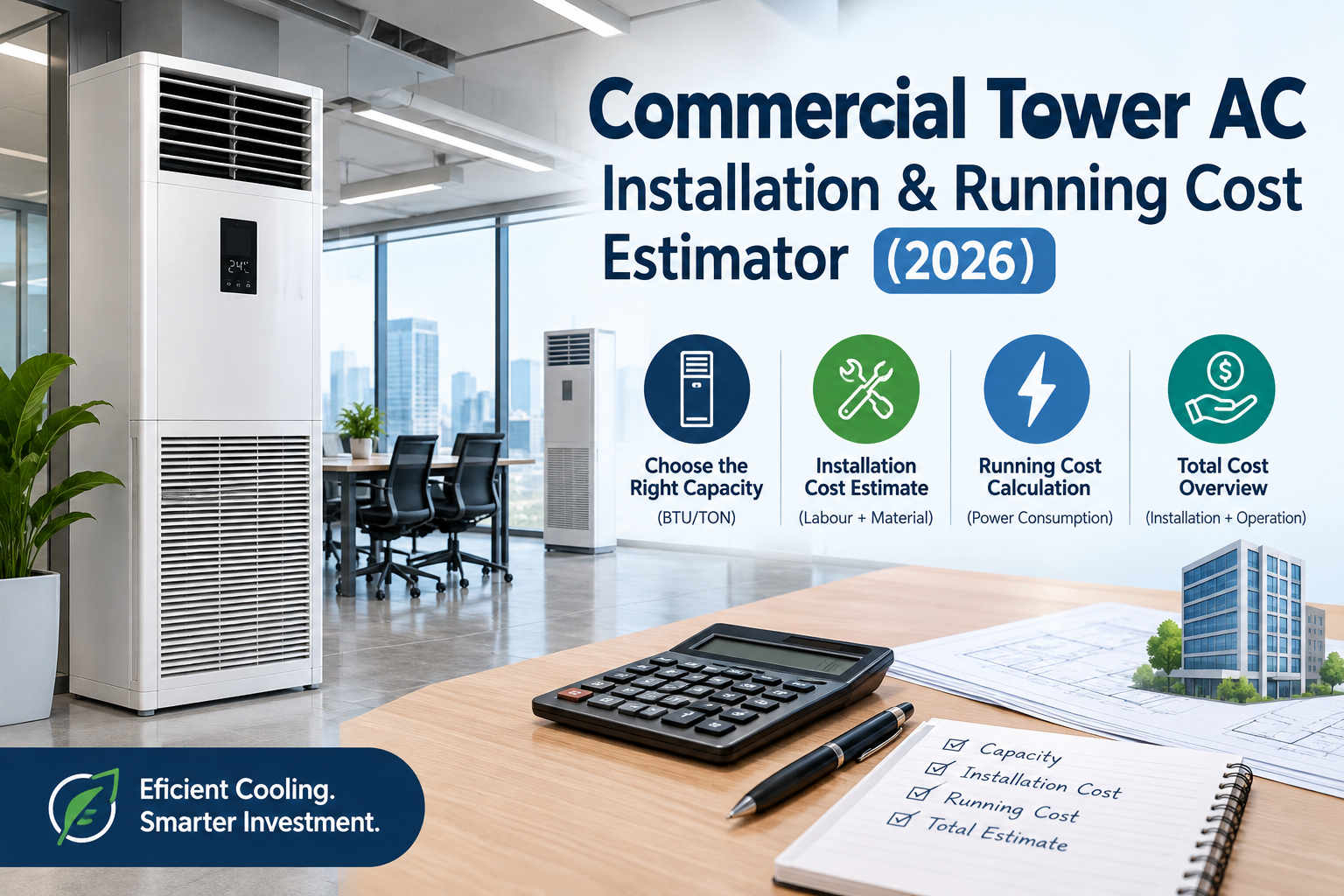
Commercial Tower AC Installation & Running Cost Estimator (2026)
Get a complete B2B price breakdown for commercial tower air conditioners. Calculate 2 Ton, 3 Ton, and 5 Ton purchase rates, electricity running costs, and maintenance expenses.
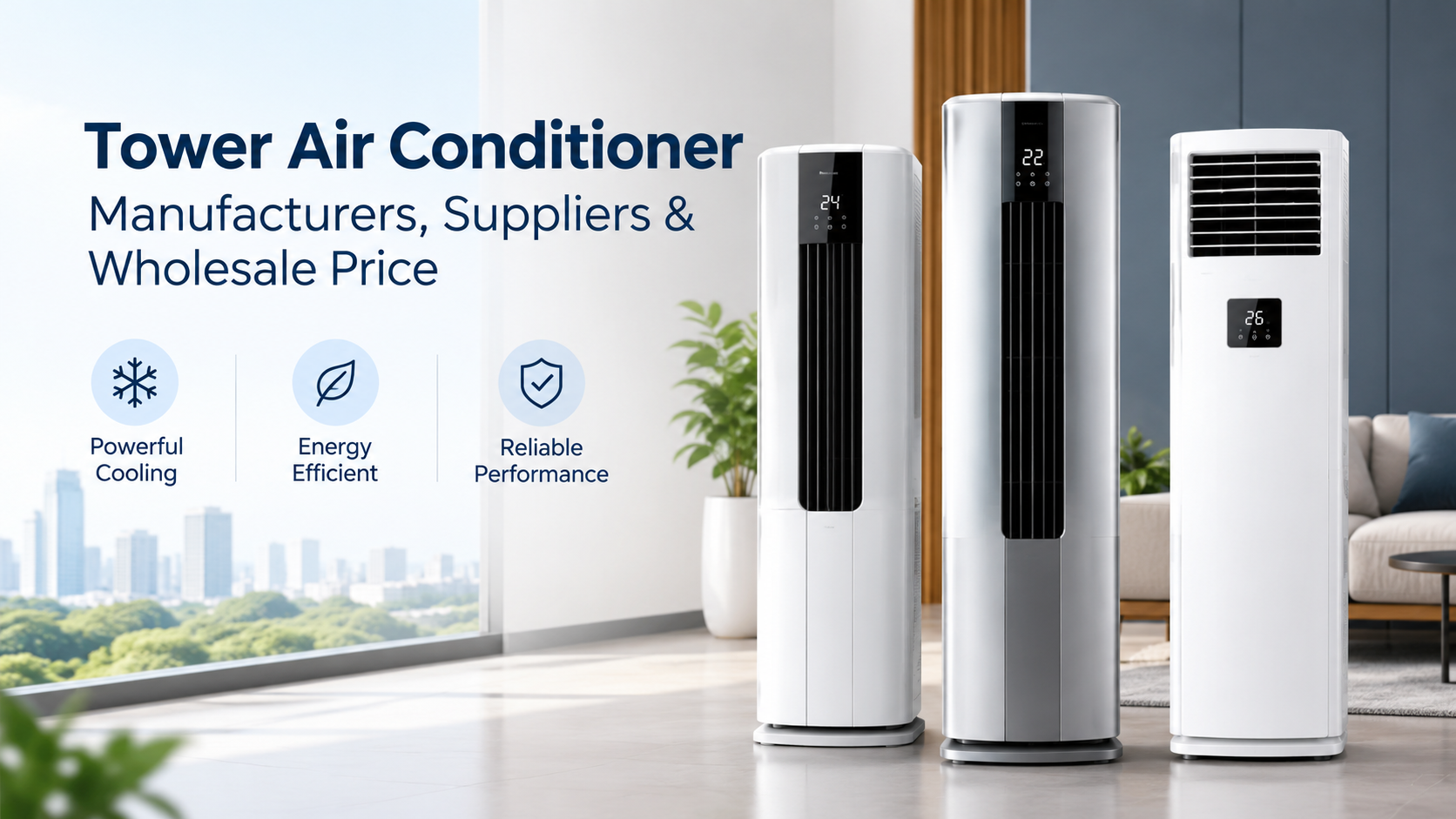
Selecting the proper climate control system for large commercial buildings, banquets, open-plan offices and short-term retail locations is an important operational choice. While standard home systems such as a window AC 1 ton, or small wall-mount splits will adequately cool/heat closed-off spaces, the larger open commercial areas require high-volume air flow systems that can deliver conditioned air to remote areas of the space without requiring major modifications to existing walls.
In 2026 there were two main types of cooling systems available to commercial customers. They were the floor-standing tower air conditioner unit and the high capacity portable AC 1.5 ton. The purpose of this guide is to break down the differences between these two systems, their respective power consumption rates and the various purchasing considerations that will assist b2b customers when selecting which type of cooling system is right for them.
A floor-standing tower air conditioner—often referred to as a column AC—is designed specifically for high-footfall, open-layout spaces. Positioned directly on the floor, these high-capacity cooling systems draw warm air from floor level and project powerful vertical streams of chilled air across distances ranging from 10 to 20 meters.
Key Commercial Advantages:
No Wall/Ceiling Alterations: Perfect for heritage buildings, glass-walled showrooms, and rented commercial spaces where wall mounting is prohibited.
High Cubic Feet per Minute (CFM): Delivers massive air turnover rates, keeping large crowds comfortable during peak summer months.
Aesthetic Integration: Sleek vertical designs complement modern corporate receptions, showrooms, and exhibition centers.
For spaces requiring temporary, mobile, or localized cooling, a portable AC 1.5 ton or portable AC 1 ton unit offers a versatile alternative. Fitted with heavy-duty castor wheels and flexible exhaust hose kits, portable units can be moved easily between cabins, server rooms, and modular event booths.
Unlike permanent installations, portable air conditioners are self-contained systems that require minimal setup: simply plug into a standard power outlet, vent the hot air hose through a window or drop ceiling panel, and begin cooling.
Performance Metric | Commercial Tower Air Conditioner | Portable AC 1.5 Ton Unit |
|---|---|---|
Typical Capacity | 2.0 Ton – 5.0 Ton+ | 1.0 Ton – 1.5 Ton |
Air Throw Range | 12 to 20+ Meters | 4 to 6 Meters |
Power Phase | Single-phase or 3-Phase (3.0 Ton+) | Single-phase (Plug & Play) |
Primary Use Case | Lobbies, Banquet Halls, Prayer Halls | Server Cabins, Event Booths, Site Offices |
Installation Effort | Medium (Requires outdoor condenser link) | Zero (Exhaust Hose Venting Only) |
For business facility managers, power consumption directly impacts monthly operational costs. Calculating 1.5 ton AC watt usage helps estimate ongoing electrical expenditure across commercial properties.
Standard Non-Inverter 1.5 Ton AC Watt Rating: Typically consumes between 1,400 Watts to 1,800 Watts per hour under full load.
Inverter / Energy Efficient AC Rating: Variable-speed inverter models pull between 900 Watts to 1,300 Watts per hour once the desired room temperature stabilizes.
When choosing between different types of AC units, investing in an energy efficient AC with a higher ISEER rating or inverter compressor technology reduces operational electrical costs by up to 30–40% annually in high-usage commercial environments.
Commercial properties in regions experiencing extreme seasonal temperature variations often benefit from dual-mode climate control. Modern floor-standing column units and high-end portable models now feature hot and cold AC heat pump technology.
A hot and cold AC unit reverses its refrigeration cycle during winter months to supply clean, ductless heating. This eliminates the need to purchase, store, and maintain separate space heaters during colder months, maximizing ROI on commercial equipment investments.
When procuring commercial cooling equipment in bulk, sourcing directly from verified OEMs and distributors ensures maximum cost savings and warranty coverage:
Calculate Sensible Heat Load: Factor in ceiling heights (especially if over 10 feet), occupancy density, and heat-generating equipment before finalizing tonnage.
Verify Power Supply Infrastructure: Ensure your facility has appropriate 3-phase electrical connections if installing commercial tower units exceeding 3.0 Tons.
Compare Direct Factory Quotes: Use B2B marketplaces like Mayo World to obtain competitive wholesale pricing directly from verified manufacturers.
Conclusion
Whether your facility requires a high-volume tower air conditioner for expansive lobbies or a versatile portable AC 1.5 ton unit for spot cooling, choosing the right system ensures efficient temperature regulation and reduced energy overheads.
Explore Mayo World’s verified network of cooling equipment manufacturers to request instant B2B price quotes and volume procurement discounts across India today.
If you need to cool large open areas like lobbies, showrooms, or halls with long air throw (10–20 meters), a tower air conditioner is the best choice. However, if you need flexible spot cooling for IT server rooms, temporary cabins, or rental event spaces without installation hassle, a portable AC 1.5 ton unit is ideal.
Get the latest design insights and tutorials delivered to your inbox.