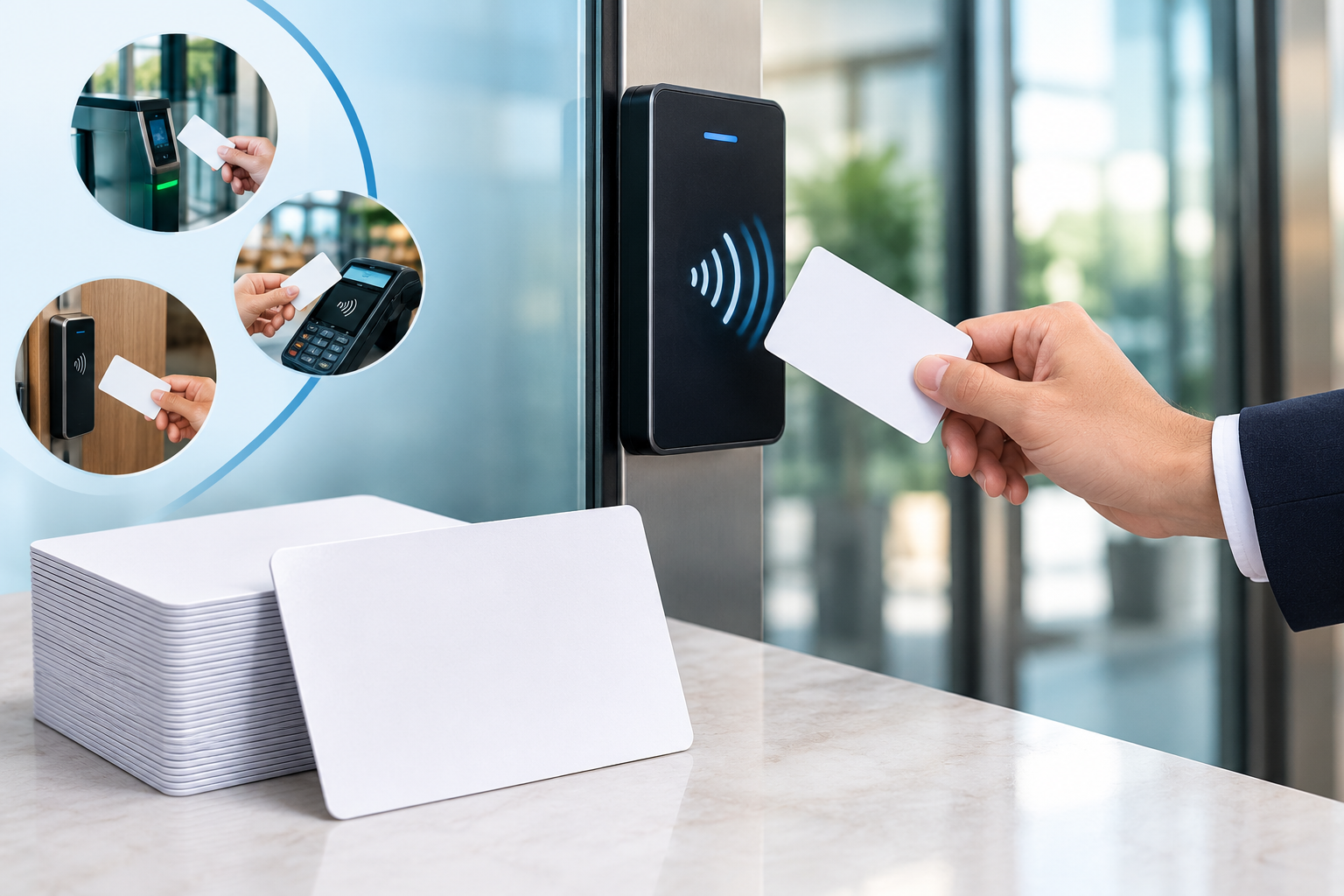
B2B Sourcing Guide: How to Procure Bulk NFC Cards for Corporate Infrastructure in 2026
A complete procurement guide for sourcing bulk NFC cards. Compare NXP NTAG213 vs NTAG216, PVC, metal, and wooden substrates for corporate deployment.
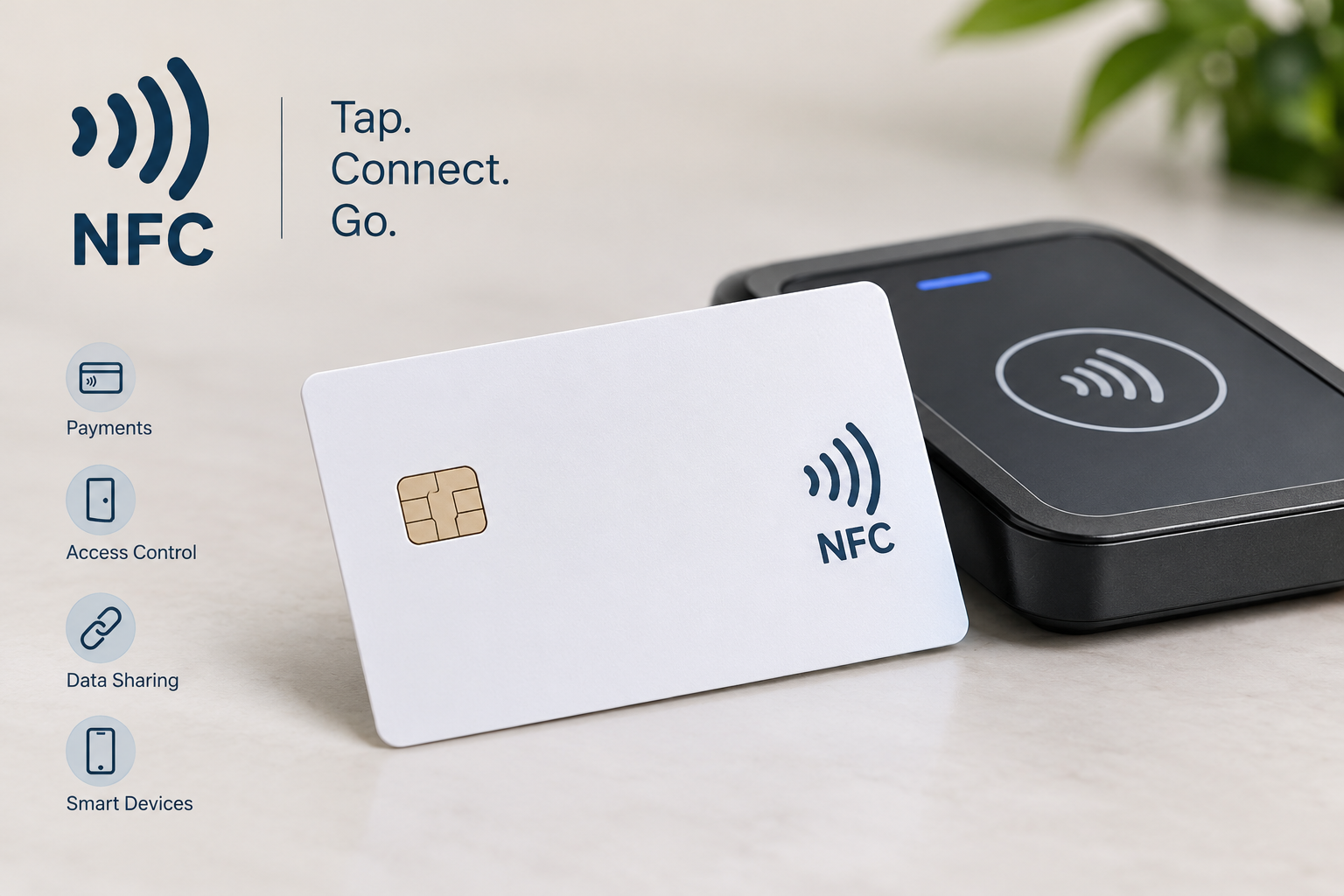
Near Field Communication (NFC) is a short-range, high-frequency wireless communication technology, primarily operating at 13.56 MHz within the ISM radio band. It utilizes standardized protocols such as ISO/IEC 14443 Type A and NFC Forum Type 2 tag specifications. An NFC card comprises a passive microchip and an etched aluminum or copper-wound antenna coil. When positioned within a 0 – 5 cm range of an active reader (e.g., smartphone or USB desktop reader), the card is energized through magnetic inductive coupling, enabling it to relay stored data payloads.
Commercial smart card data is organized using the NFC Data Exchange Format. An NDEF message consists of one or more NDEF records with different data types:
URI record (https://): Will trigger mobile browsers to open web links, Google Review forms or business card landing pages.
vCard record (text/vcard): Will deliver offline contact records to the smartphone address book.
Text record: Will store plaintext notes or hold encrypted serial numbers for access control systems.
NXP NTAG family microchips organize memory in 4-byte pages:
Manufacturer info / UID (pages 0-1): 7-byte unique identification number. Factory programmed and cannot be changed.
Lock bytes (page 2): Read-only lock flags
CC / Capability Container (page 3): Defines tag compatibility, NDEF memory availability
User data area (pages 4+): Write-protectable NDEF memory space (144 bytes available on NTAG213; 888 bytes on NTAG216)
Public counter standees or corporate badges can be made completely write-protected using either 32-bit password protection or OTP (One-Time Programmable) lock bits during encoding to prevent tampering.
Technical Sourcing:
View full technical specifications, compare ICs and discover custom OEM manufacturing options on Mayo World's NFC Card Category Listing.
The primary distinction between RFID (125kHz or 13.56MHz MIFARE) and NFC cards lies in technology purpose: older RFID cards are one-way unencrypted ID protocols for legacy access control readers. A NFC tag operates exclusively at 13.56MHz (ISO/IEC 14443-A) uses standardized NDEF message format for two-way communication and built-in read compatibility with all modern iOS Android smartphones without requiring special hardware accessories.
Get the latest design insights and tutorials delivered to your inbox.