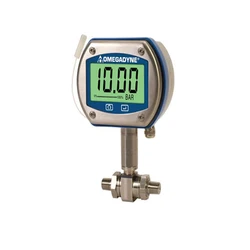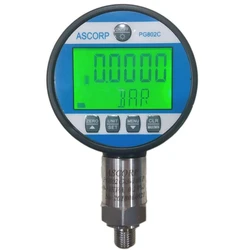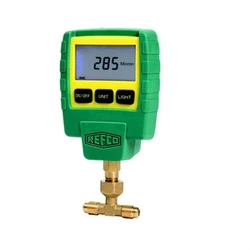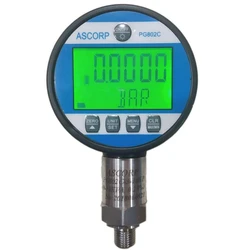
Range 2 Pressure 10-5 mbar to 10-6 mbar Digital Penning Gauge, Display Type Analog, No of Gauge Heads 02
Active
Premium
Key Highlights
Request Price
MOQ
1
Available Variants
Technical Specifications
| Parameter | Value |
|---|---|
| Frequency | 50 hz |
| Display Type | Analog |
| Range 1 Pressure | 10-3 mbar to 10-5 mbar |
| Range 2 Pressure | 10-5 mbar to 10-6 mbar |
| Model Name/Number | C - 80 |
| No. of Gauge Heads | 02 |
| Display Pressure Range | 10-3 mbar to 10-6 mbar |
| Minimum Order Quantity | 01 |
Product Description
Essential Vacuum Measurement Solution for Procurement Teams and Store Owners
This serves as a cold cathode ionisation gauge consisting of two electrodes anode and cathode. A potential difference of about 2. 2 kv is applied between anode and cathode through current limiting resistors. A magnetic field is introduced at right angles to the plane of the electrodes by a permanent magnet having nearly 800 gauss magnetic field which will increase the ionisation current. The electrons emitted from the cathode gauge head main part of the gauge head are deflected through the use of magnetic field applied at right angles to the plane of the electrodes constructed from to take helical path before reaching the anode loop. Thus following very the chance, Long path of collision with gas molecule is high even at low pressures. The secondary electrons produced by ionisation themselves perform similar oscillations and the pace of ionisation increases the electrons, Rapidly. Eventually are captured by the anode and equilibrium is reached when the level of electrons produced per second by ionisation is the sum of positive ion current to the cathode and the electron current to the anode and is crafted to meet the needs of measure the strain of the gas. This instrument with the sensor having wider range in high, Of applications systems designed for vacuum applications that the final vacuum to be measured in process chamber. These instruments may be utilized vacuum furnaces as well, In high coating units, Sputtering units, Vacuum systems as a variety of others applications where high vacuum to be measured within the spectrum of 10, 2 to 10, 6 m. Bar.
Shipping Information
Availability
In Stock
Price
Excluding all taxes
Ships from
Bengaluru
Delivery Location
All India delivery available
Shipping
As per delivery location
Seller Information
H
Bengaluru, Karnataka, India
Delivery Time:
7–15 Business Days
Shipping Options:
Trust & Safety
Trade Assurance Protected
Secure Payment Methods
Logistics Tracking Available
24/7 Customer Support
You May Also Like
Digital Gauge Pressure
Manifold Gauges
Vacuum Gauge
Ss Pressure Gauge
Tyre Pressure Gauges
Analog Pressure Gauges
Diff Pressure Gauge
Cng Pressure Gauges
Measurement Gauges
Magnehelic Gauge
Glycerin Filled Pressure Gauges
Air Pressure Gauges
Depth Gauge
Hydraulic Gauge
Diaphragm Pressure Gauge
Oil Pressure Gauge
Air Gauge System
Water Pressure Gauge
Gas Pressure Gauges
Pressure Gauge Accessories
Precision Gauge
Electric Contact Gauge
Bourdon Tube
Compression Gauges
Precision Test Pressure Gauge
High Pressure Gauges
Pneumatic Pressure Gauges
Compound Gauge
Fire Extinguisher Pressure Gauges
Commercial Pressure Gauges
Liquid Pressure Gauge
Electronic Thickness Gauge
Capsule Pressure Gauge
Universal Surface Gauge
Vacuum Meter
Brass Pressure Gauge
Low Pressure Gauge
Gauge Flange
Utility Pressure Gauges
Weather Proof Pressure Gauges
Penning Gauges
Pump Pressure Gauges
Electric Pressure Measuring Instrument
Paint Inspection Gauges
Gauge Pressure