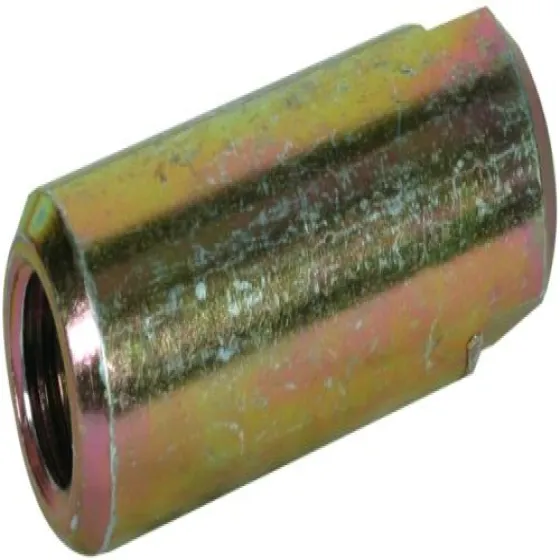
UsageApplication industrial and other Earthing Rod, Thickness 20 mm to 40 mm, Material Mild Steel
Active
Premium
Key Highlights
$ 7.37
MOQ
1
Available Variants
Technical Specifications
| Parameter | Value |
|---|---|
| Material | Mild Steel |
| Thickness | 20 mm to 40 mm |
| Length Of Rod | 3 Meter |
| Country of Origin | Made in India |
| Usage/Application | industrial and other |
| Minimum Order Quantity | 100 |
Product Description
Compatible Earthing Rods for Industrial and Electrical Grounding Systems
A copper earthing system denotes a grounding system in which copper is the primary material Suitable for creating a grounding effect electrodes, Conductors, And related components. The goal of an earthing system is to furnish a low, Resistance channel for defects currents to penetrate the soil thereby ensuring the security of electrical system setups and protecting against current bursts and equipment damage. Key elements of a copper earthing system include 1. Copper grounding electrodes these are typically rods or plates made of solid copper that are driven set into the soil copper is chosen for its excellent electrical conductivity, Allowing for efficient dissipation of fault currents. 2. Copper earthing strips or conductors copper strips or conductors are utilized for interconnect various parts of the earthing system, Ensuring a continuous and low, Resistance path to the ground. 3. Copper busbars in electrical copper busbars, Distribution systems frequently utilized as a centralized point for grounding connections. They provide a common grounding reference for various equipment. 4. Copper clamps and connectors connectors and clamps Composed of copper material are used to join different elements of the earthing system securely. Proper connections are crucial for maintaining the potency of the grounding system. 5. Copper grounding plates under certain circumstances flat copper plates function as grounding electrodes, Especially in areas with high soil resistivity. Advantages of a copper earthing system, High conductivity copper stands out as an element oficipant in the leading conductive materials, Allowing for efficient dissipation of fault currents., Corrosion resistance copper has good especially when, Corrosion resistance compared to some ensuring the, Other metals long, Term effectiveness of the grounding system., Durability copper boasts long-lasting strength material that withstands environmental conditions and maintains its performance over time., Low maintenance copper earthing systems typically demand minimal upkeep compared to systems using other materials. It is crucial to design and install a copper earthing system consistent with local power system guidelines and standards. Variables including soil resistivity the kind together with, Of installation the dimensions pertaining to electrical components system will influence the layremoved from the grounding system. Regular testing and maintenance are important to confirm the continued effectiveness of the copper earthing system.
Shipping Information
Availability
In Stock
Price
Excluding all taxes
Ships from
New Delhi
Delivery Location
All India delivery available
Shipping
As per delivery location
Seller Information
R
Rattan Lal Jain & Bros
Verified
New Delhi, Delhi, India
Established:
2023
Delivery Time:
7–15 Business Days
Shipping Options:
Trust & Safety
Trade Assurance Protected
Secure Payment Methods
Logistics Tracking Available
24/7 Customer Support
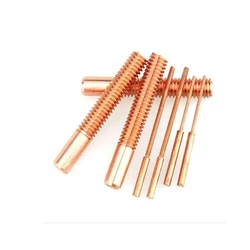
Tungsten Copper Electrodes — Industrial, medical
Request Price
per Pc
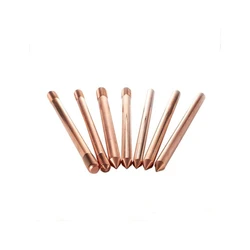
Copper Bonded Earthing Rods — Resistance to corrosion
Request Price
per Pc
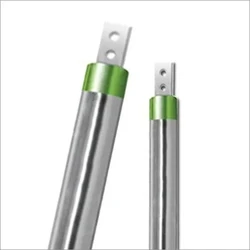
Earthing Industrial Electrode — Non-corrosive
Request Price
per Pc
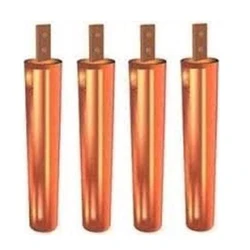
Electrode Earthing Rod — Grounding construction
Request Price
per Pc
You May Also Like
Discharge Rods
Chemical Earthing Rod
Earthing Rod
Copper Bonded Earthing Electrode
Copper Bonded Earthing Rod
Earthing Rod Gi
Solid Copper Ground Rod
Discharge Stick
Maintenance Free Earthing
Earthing Gel
Titanium Mesh Electrode
Electrical Ground Rod
Copper Grounding Rods
Earthing Pole
Copper Earth Rod
Earth Discharge Rod, Brand TRANSPOWER, Material FRP TELESCOPIC, Voltage 11 To 33 KV
$ 20.53
per Piece (pcs)
Material FRP Electrical Discharge Rod, Diameter 40mm, Voltage 11 kV
$ 25.66
per Piece (pcs)
Earth Discharge Rod, Brand ORTHRIVE, Color Silver
$ 20.66
per Piece (pcs)
Voltage 25000 Volts, Brand GEW Electrical Discharge Rod, Number Of Pipe 3 sections
$ 10.60
per Piece (pcs)
You May Also Like