
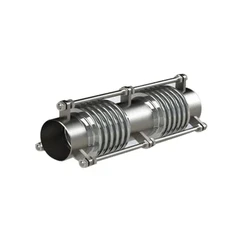
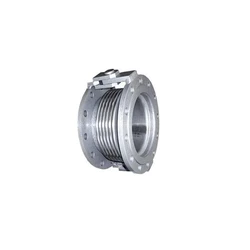
UsageApplication FOR DUTIN, End Connection FLANGED SS Flange Expansion Bellow, Material MS SS, Available Sizes AS REQUIRED
Active
Premium
Key Highlights
$ 2.86
MOQ
1
Available Variants
Technical Specifications
| Parameter | Value |
|---|---|
| Size | AS REQUIRED |
| Color | NATURAL |
| Material | MS SS |
| End Connection | FLANGED |
| Available Sizes | AS REQUIRED |
| Country of Origin | Made in India |
| Usage/Application | FOR DUTIN |
| Minimum Order Quantity | 2 |
Product Description
This type of augmentation makes joints the most reliable and least problematicWell-suited to areas with minimal thermal expansion The main purpose of the tilt in essential expansion metal plates is to allow the flow to move in both directions simultaneously Their minimal dimensions make these roars typically fabricated from SS304L, SS316L, SS316Ti, And SS321 If a situation with extraordinary demands arises, They have the capability to be manufactured using Inconel and other nickel-based alloys Development metal markings should be aligned co-pivotally with the centerline of the lines. The purpose of these marks is to compensate Crucial advancements enable the achievement of desired cyclic life when they are present Various types of expansion, Such as precise or parallel, Affect the bellows' cycle life; overall, These expansions Joints are placed between straight segments where the development aligns with the line’s centerline; one should, In summary Employ these bellows when motion compensation occurs along a linear path; slight lateral or angular shifts can still be accommodated Affect the repetitive life cycle of the expansion joint, As bellows are not designed to absorb rotary movements resulting from the pipeline When pressure exists between channeling systems, A specific number of expansion joints become necessary. The optimal channeling system is the one that is fractured amid intermediate levels accompanied by metallic sounds at every phase just in case The development and compression rate exceeds that of the Roars Limit 2 bellows featuring a central foot support The two roars are positioned between the line centers, Allowing the hub to extend from both ends The individual howls are capable of consuming the line, Particularly when used in cryogenic settings The development joint will continue through the funneling section The framework is designed to shrink
Shipping Information
Availability
In Stock
Price
Excluding all taxes
Ships from
Vadodara
Delivery Location
All India delivery available
Shipping
As per delivery location
Seller Information
F
Flexible Bellows
Verified
Vadodara, Gujarat, India
Established:
2016
Delivery Time:
30–45 Business Days
Shipping Options:
Trust & Safety
Trade Assurance Protected
Secure Payment Methods
Logistics Tracking Available
24/7 Customer Support
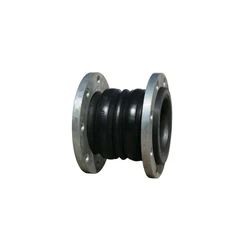
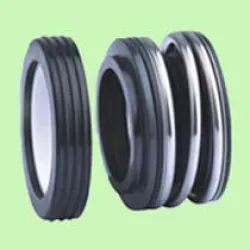
Material Rubber Rubber Bellow, Size 25 mm NB to 1800 mm NB, UsageApplication Industrial
Request Price
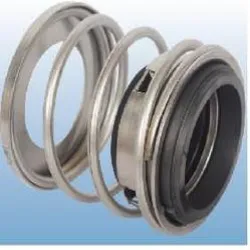
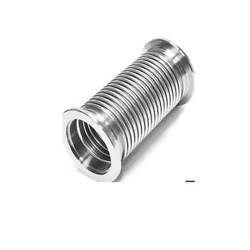
Corrugated Bellow For, Brand Noble Rubber, Flexibility Lateral, Axial, Torsional, UsageApplication Industrial
$ 11.31
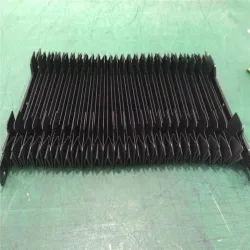
Rubber Bellow, Surface Finishing Depends on Requirement, Working Pressure Depends on Requirement
$ 2.59
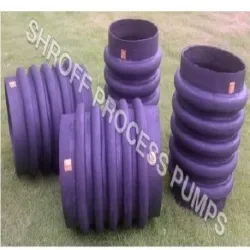
Diameter customised Victaulic Seal, Shape C - Type, Color Black
$ 0.56
You May Also Like