Commercial Green Tea Export Grades & Bulk Wholesale Sourcing Guide
Comprehensive B2B guide for bulk green tea wholesalers, exporters, and procurement managers. Source wholesale tea leaves directly from verified processors on Mayo World.
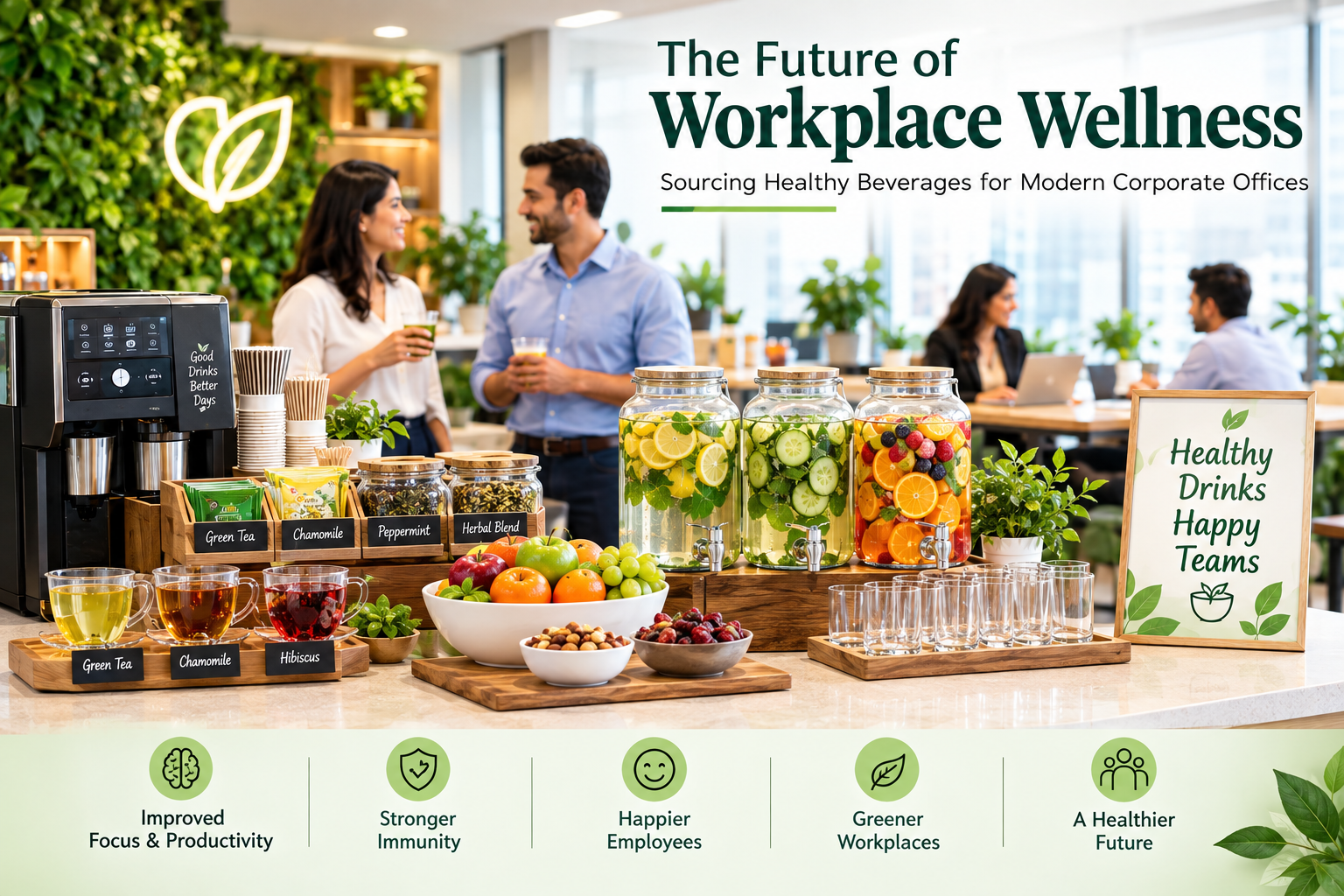
Corporate culture has undergone a massive transformation over the past decade. Perks like annual health check-ups, ergonomic seating, or festive celebrations are no longer the only highlights for employees. Forward-thinking companies today view health through a holistic lens. Executive leaders and HR managers now fully grasp that long-term business success is directly linked to the daily well-being, mental resilience, and energy levels of their workforce.
Amidst the many changes reshaping the modern workplace, office pantries and refreshment centers are receiving significant attention. Gone are the days of peanut butter packets, oversized jars of sugary snacks, heavy instant premix packets that could double as paperweights, and stale, high-caffeine dark roast coffee (or poor-quality decaf). As the concept of the modern office pantry gains widespread adoption, it is redefining traditional norms—particularly regarding the products stocked. Companies are replacing empty-calorie snacks with healthy, nutrient-rich options. Central to this shift is a strategic approach to sourcing, incorporating organic teas, herbal infusions, and premium green tea leaves.
In this guide, you will discover why the choice of beverages matters for your corporate environment, how healthy drinks can boost employee productivity, and how procurement managers can effectively source premium bulk tea from B2B suppliers.
For decades, relying on caffeine to cope with workplace pressure has been commonplace in the corporate world. When productivity dipped in the afternoon and deadlines loomed, employees often turned to strong coffee rather than balanced meals or high-sugar energy drinks. However, the physical downsides of this habit are well-known: spikes and crashes in blood sugar levels (leading to intense fatigue and lethargy around 4 PM), increased anxiety, stomach upset, and sleep disturbances.
In response, HR strategists sought solutions by introducing healthier alternatives that avoid the jitters or restlessness associated with traditional options. Functional beverages—ranging from green tea to matcha and botanical herbal blends—offer a balanced mix of caffeine and essential amino acids like L-theanine.
When combined with caffeine, L-theanine promotes a state of calm alertness. Unlike coffee, green tea does not cause jitters or heart palpitations; instead, it fosters sustained mental clarity. One does not need a degree in physiology to understand how this subtle biological benefit helps employees remain calm under immediate work pressure, stay focused during lengthy strategic meetings, and stave off the mid-afternoon slump.
Moreover, workplace productivity relies heavily on well-structured wellness programs. Leading health and corporate wellness platforms like The Wellness Corner emphasize that adopting preventive health habits—such as replacing sugary drinks with herbal beverages—not only maintains high energy levels throughout the day but also contributes to reducing employee attrition rates in the long run. When leadership plays an active role in fostering a healthy physical environment, the message is clear: employee health comes first—not last.
Upgrading your company's beverage lineup from basic instant mixes to high-grade organic teas yields measurable organizational benefits across multiple dimensions :
1) Enhanced Cognitive Function and Focus
People drink green tea because it is rich in Epigallocatechin gallate (EGCG)—a powerful antioxidant that improves brain health, reduces inflammation, and combats cellular stress. Providing employees with EGCG-rich green tea daily helps them stay mentally alert, process large amounts of data quickly, and avoid the mental fatigue associated with long workdays.
2) Reduced Illness and Stronger Immunity
Employee absenteeism due to seasonal flu and office-borne infections is a costly issue. Green and herbal teas are packed with polyphenols and bioflavonoids that help strengthen immunity. Encouraging employees to consume these daily helps them remain resilient and healthy, even during sudden weather changes; plus, they are rich in antioxidants.
3) Improved Employee Satisfaction and Employer Branding
Top talent—especially today’s young Millennials and Gen-Z professionals—pays close attention to a workplace's wellness culture. Stocking the office pantry with high-quality organic green tea, unique herbal blends, and premium loose-leaf tea offers a cost-effective daily benefit that boosts employee morale and strengthens corporate culture.
4) Alignment with Corporate Sustainability Goals
When companies purchase green tea in bulk from responsible and sustainable suppliers, they can align their internal operations with global ESG frameworks. Buying biodegradable tea bags or using loose-leaf tea is a major step towards significantly reducing single-use plastic packaging waste, especially in places like cafeterias.
When facility and procurement heads plan their B2B beverage sourcing, it is essential to understand the primary categories of teas available and their specific corporate use cases:
To build a well-rounded office pantry, procurement leads typically combine high-grade loose leaves for executive floors with eco-friendly pyramid bags for general employee pantries.
Enterprise-scale sourcing of beverages is not the same as buying consumer retail packs. Buying straight from approved producers, estate owners and wholesale trade channels means reliable high quality, cost efficiency and fulfilment of supply chains.
This is the prime aspect that corporate purchasing officers ought to review before placing a contract with any supplier.
1) Direct Estate Sourcing and Freshness
Tea leaves get worse with time if stored incorrectly. Verified B2B sourcing networks work with enterprises directly, connecting them to tea gardens as well as origin processors, without uneccessary intermediaries in the form of distributors. Green tea leaves are freshly harvested and processed for optimal preservation of their natural aroma, characteristic light astringency and full antioxidant profile.
2) Quality Certifications and Food Safety Compliance
Only by complying with bulk-buying rules Always make sure that your wholesale partners follow food safety regulations by ensuring they comply with FSSAI, ISO Certification and USDA Organic or India Organic as the case may be.
3) Packaging Integrity and Shelf-Life Solutions
At the same time, bulk tea must be protected from humidity, exposure to light and ambient odors. Commercial orders are prepared by professional suppliers in food-grade vacuum-sealed aluminum foil linings or moisture-proof bulk drums to maintain freshness during transport and long-term storage.
4) Customization and Private Labeling Capabilities
Large corporate conglomerates or hospitality chains come with certain requirements such as custom blends, design, and private-label tea bags carrying their own corporate brand. Versatile-manufacturing-hub partnerships enable custom blends tailored to corporate flavor palettes.
Businesses aiming to simplify their procurement can visit niche B2B trading platforms with verified suppliers and search for the best bulk rates, minimum order quantities (MOQs), and request samples of products before signing on enterprise-wide contracts.
Most adoption won't come from just stockpiling tea bags away un a cupboard somewhere. In this light, some setup strategies help organizations build a thriving wellness culture:
Modernizing corporate pantry selections away from high-sugar, high-caffeine options and toward quality, clean beverages is a small operational change with long-term rewards. Companies also actively promote a healthier, more productive, and more energetic workforce by providing access to premium green teas as well as herbal infusions.
At the same time collaborating with reliable bulk manufacturers and easily discoverable B2B sourcing networks make it relatively easy for facility management teams to find estate-fresh tea sources consistently, economically, and sustainably.
Contrary to high-caffeine coffee or sugary energy drinks that blast us with enough caffeine for a sharp lift, green tea hits you slower and steadier: Green tea does not provide an immediate energy hit but rather kindle instead. With L-theanine and moderate caffeine, it helps to sustain mental focus while decreasing workplace stress levels, boosting employee immune health.
Get the latest design insights and tutorials delivered to your inbox.