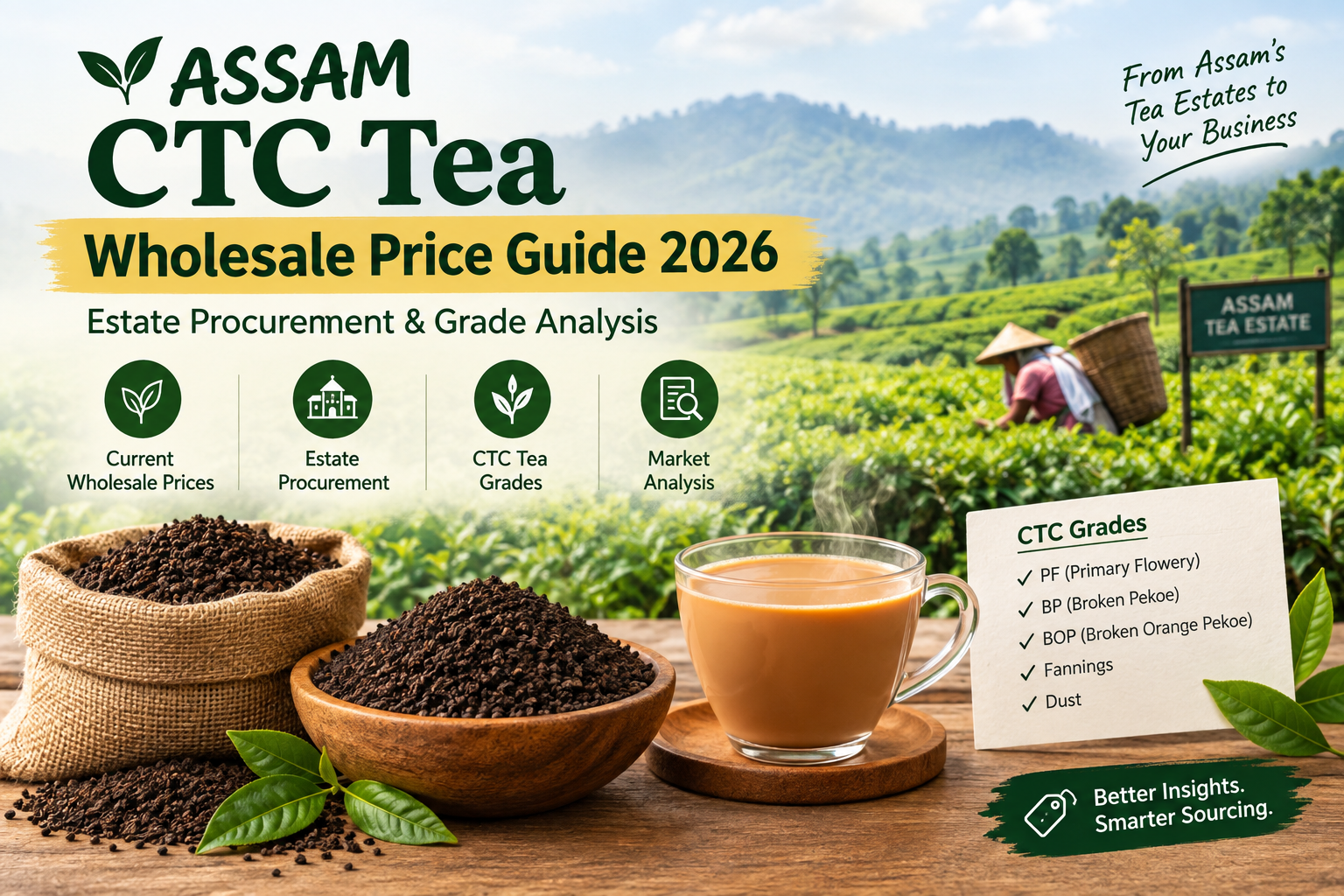
Assam CTC Tea Wholesale Price Guide 2026: Estate Procurement & Grade Analysis
Discover 2026 wholesale Assam CTC tea price trends, grade specifications (BOP, GOF, Dust), and direct estate procurement tips on Mayo World.
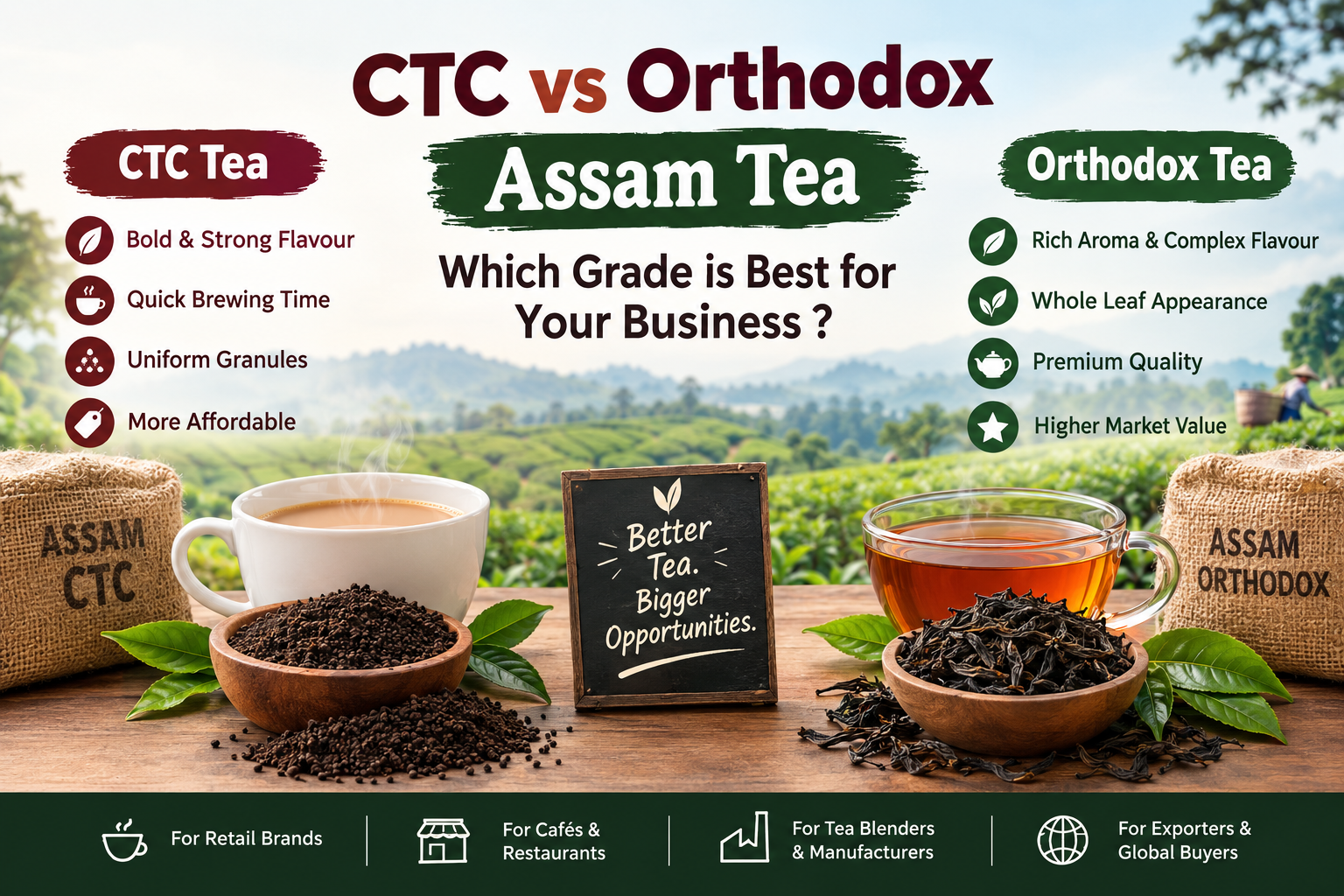
The choice of CTC (Crush, Tear, Curl) vs Orthodox Assam tea is a critical strategy decision by commercial tea manufacturers and brand owners aiming at global export. These two varieties both come from the abundant tea fields of Assam, but the processing techniques, particle sizes and flavour profiles are quite different as well as their intended commercial markets.
When it comes to getting supplies in bulk, for wholesale dealers and B2B buyers explore into the right tea grade helps in better profit margins followed by long-term customer retention. In this mega comparison, we analyze both tea categories so that manufacturers & retail dealers can make the best selection while stocking inventory.
Understanding particle characteristics helps wholesale suppliers and enterprise buyers serve their specific markets effectively:
| Feature | CTC Assam Tea | Orthodox Assam Tea |
| Processing Method | Machine-cut granular processing | Whole leaf traditional rolling & oxidation |
| Flavor & Strength | Strong, malty, brisk, and deep amber | Light, aromatic, floral, and single-origin |
| Primary Audience | Mass market, commercial milk tea (Chai) | Premium retail, specialty tea shops, export |
| Bulk Demand | High-volume supply for retail dealers | High-value niche market for global exporters |
| Export Markets | Domestic & regional wholesale dealers | Premium international buyers & global exporters |
Whether you are expanding your network as regional dealers, sourcing raw CTC leaves as product manufacturers, or fulfilling international orders as registered exporters, securing high-grade tea in bulk requires trusted partners.
Connect directly with verified bulk assam tea suppliers on Mayo World to request direct factory quotes, custom blends, and sample shipments.
Q1. In which grade do the bulk tea dealers get higher margins?
However, these sales are insignificant to the overall benefit CTC tea gives local dealers in terms of increased turnover and higher sales volume over higher value Orthodox tea figures when compared on a profit per kilogram basis for specialty suppliers and global exporters.
Q2. Will CTC and Orthodox Assam tea be blended together?
Ans: Certainly, many of the well-experienced tea manufacturers manufacture some unique combination of Orthodox leaves to express fragrance and CTC granules that offer strength into the same bag for which whole sale dealers provide a completely different product for market.
Q3. What Are the Techniques Exporters Use to Preserve Orthodox Assam Tea Quality During International Adjustments?
Ans: Top-in-class exporters send Orthodox tea in bulk using vacuum-sealed aluminum foil liners inside wooden chests or corrugated cartons so the whole leaves do not get crushed and moisture/ ECS (evaporating un-volatile components) loss is minimized during ocean transit.
Q4. What is the minimum order quantity (MOQ) supplied by suppliers when placing bulk orders?
Answer- In Mayo World, the verifies suppliers and estate manufactures usually have higher bulk MOQs set to 100 kg or 500 kg, so regional dealers or freshly emerging brands find it easy to scale up in terms of order.
Q5. Indian tea exporters have only one way to check FSSAI and Tea Board compliance
Ans: Registered exporters need to ask for batch-wise CoA reports from manufacturers as a part of the process, along with complying all bulk dispatches with Tea Board of India export guidelines and safe limits by FSSAI.
Testing
Get the latest design insights and tutorials delivered to your inbox.